Self-Editing: Should You Edit Your Own Writing?
Writers face a universal conundrum: Can you trust yourself to spot every slip of grammar, craft the perfect prose, and kill your darlings without mercy?

Or should a professional step in and take over the reins? Hiring a professional editor can be a costly endeavour and force you to step out of your comfort zone, but self-editing can be riddled with unwanted risks.

Every writer faces this debate sometime in their career. But, how do you make the right decision?

We’ve taken it upon ourselves to share some insight into the pros and cons of self-editing, how to improve your editing skills, and the key reasons for taking the leap to hire a professional.

Self-editing? Check. Now what?
This is the part where we help you make the write move.

Table of Contents

    What is Self-Editing?

    Self-editing is simply editing your own work. Aspiring and professional writers alike know that editing is an essential step in completing and publishing any text.

    So, while editing is usually best done by a professional editor, you can put your skills to the test and edit your own work.

    The process of self-editing is straightforward. You’ll thoroughly comb through the text, searching for and correcting mistakes in grammar, punctuation, layout, consistency, language use, and so forth.

    The goal is to revise your work to ensure it’s clear, concise, and of the highest possible quality. But is self-editing the right choice for you?

    The Case for Self-Editing

    Naturally, self-editing has benefits, which is why some writers opt for this route. You might be considering it yourself because of:

    Intimate Knowledge of the Work

    Nobody knows your work better than you do. From the first spark of the idea to the final draft, your writing is an extension of your mind. You know your writing’s purpose or message better than anyone.

    Self-editing can preserve your intentions by avoiding external influence.

    This makes self-editing particularly useful when the writing is deeply personal or specific to your experiences or beliefs.

    Cost Effectiveness

    The truth is that it’s not always cheap to hire an editor, especially for long-form texts. So, self-editing may be the most cost-effective option at times.

    While hiring an editor costs money, editing your work is a transaction in time – something that may be more accessible to you. If it’s a transaction you’re willing to make, you can benefit by:

      • Saving money in the short term, especially if you have a long-form manuscript.

    Immediate Availability

    When you edit your own work, you have full access to the “editor” and can work on the project at any given time. Wherever you are, your work is close by and available for edits whenever you have a chance.

    This can potentially improve your writing schedule, allowing for a flexible approach and giving you the chance to make real-time edits during the writing process.

    Skill Development

    The importance of self-editing lies mostly in the fact that it’s the perfect opportunity to improve your skillset. When a writer harnesses editing skills, their writing will improve – and significantly. 

      • Your eyes will be trained to spot mistakes faster/avoid making them.
      • Your perception of your work will become more objective.
      • The writing process will become more streamlined and efficient.

    Voice Preservation

    Every writer is protective of their voice. By that, we mean maintaining the uniqueness and authenticity that give writers individual identities.

    When you self-edit, you can ensure your authentic voice is preserved and your style is maintained, as no external influences will have the chance to change it.

    You might even find that your style evolves and improves through this approach, since reworking your text means getting stuck in and getting your hands dirty.

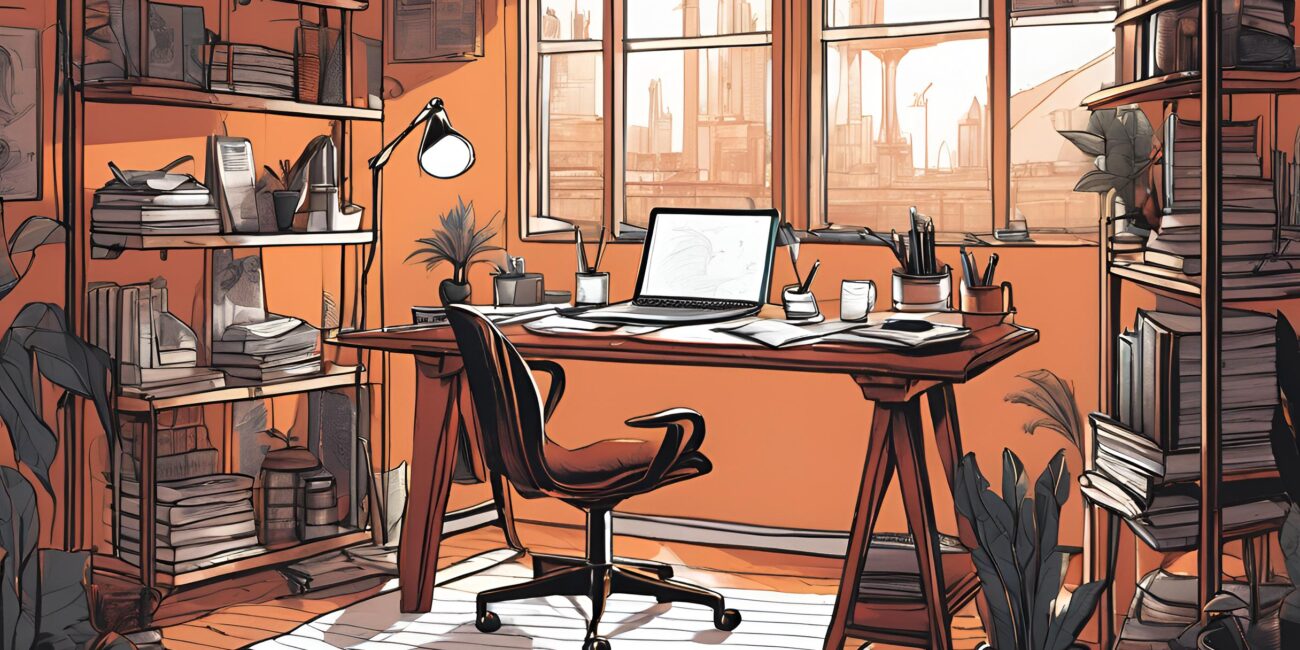
    A writer's desk in front of a window

    The Challenges of Self-Editing

    While self-editing may have benefits, it’s also prone to challenges:

    Emotional Attachment

    Writers are emotionally attached to their work – it’s only human. It’s also largely what makes for a good writer, but it isn’t always beneficial at the editing stage.

    Creating emotional distance is crucial when editing because it allows you to get rid of anything that doesn’t benefit your writing.

    Look at it this way: your manuscript contains a generalisation that has been accurate in your experience, but may be offensive to your audience. Your personal perspective creates bias, so you don’t realise this.

    You only become aware of the generalisation once an external editor reviews your work, potentially saving you from bad reviews and responses.

    Blind Spots

    Writing blind spots are weak points in a writer’s knowledge, understanding, or experience. Every writer has them at some point in their career.

    Blind spots often appear in genre writing, such as a plot hole in a mystery, an oversight in historical fiction, or a flawed theory in science fiction. It’s nothing to be ashamed about since you only know what you know.

    However, it can be caught early on by hiring an editor who is experienced in the niche you’re pursuing and who knows exactly what to look out for.

    This not only saves you from an uncomfortable situation when you later realise your mistake, but also acts as a learning opportunity, which a great writer should always welcome.

    Error Fatigue

    Have you ever read over a page multiple times in one day, only to find a blatant error on that same page a few days later? That’s called error fatigue.

    You might also be familiar with the term “word blindness”, which refers to the inability to recognise or understand the words you’re looking at.

    It may sound strange, but after enough time in front of the same words it does happen and usually leads to missing grammatical and other errors.

    Familiarity with the text plays a big role in error fatigue. When you’ve seen the same text too many times, your eyes might assume the correct words are there. As a result, you’ll miss errors that you would otherwise notice if seeing the text for the first time.

    Perfectionism

    Perfectionism is a double-edged sword for creatives. While it’s good to strive for the best, you must be realistic about what is achievable. Sometimes, that drive for perfection can make you more destructive than constructive.

    For example, when perfectionism makes you refuse an editor’s help, you’re heading to a destructive place.

    Avoiding the natural editing process is destructive because it only delays the inevitable.

    Feel familiar? We’ve found these tips useful to curb destructive tendencies:

      • Remember that having something to edit is already a huge accomplishment, and it can only get better from here.
      • Try different editors until you find the right fit. The bonus about an editor is that they’re not expecting perfection — they’re just aiming for the best possible work, and you should be, too.
      • Give yourself a break. Pushing for perfection often leads to overworking, which leads to overlooking mistakes. Sometimes surrendering to an editor and giving yourself a break can be an eye-opener.

    Imposter Syndrome

    Similar to perfectionism, imposter syndrome is built on the belief that if it isn’t perfect, then it isn’t good enough. It’s the idea that you don’t belong because you aren’t qualified or talented enough to succeed.

    Like perfectionism, it hinders your editing abilities because you’re assuming you won’t succeed before even giving yourself a chance.

    In this scenario, it’s best to introduce an editor to relieve the pressure and give your text the love you might be holding back.

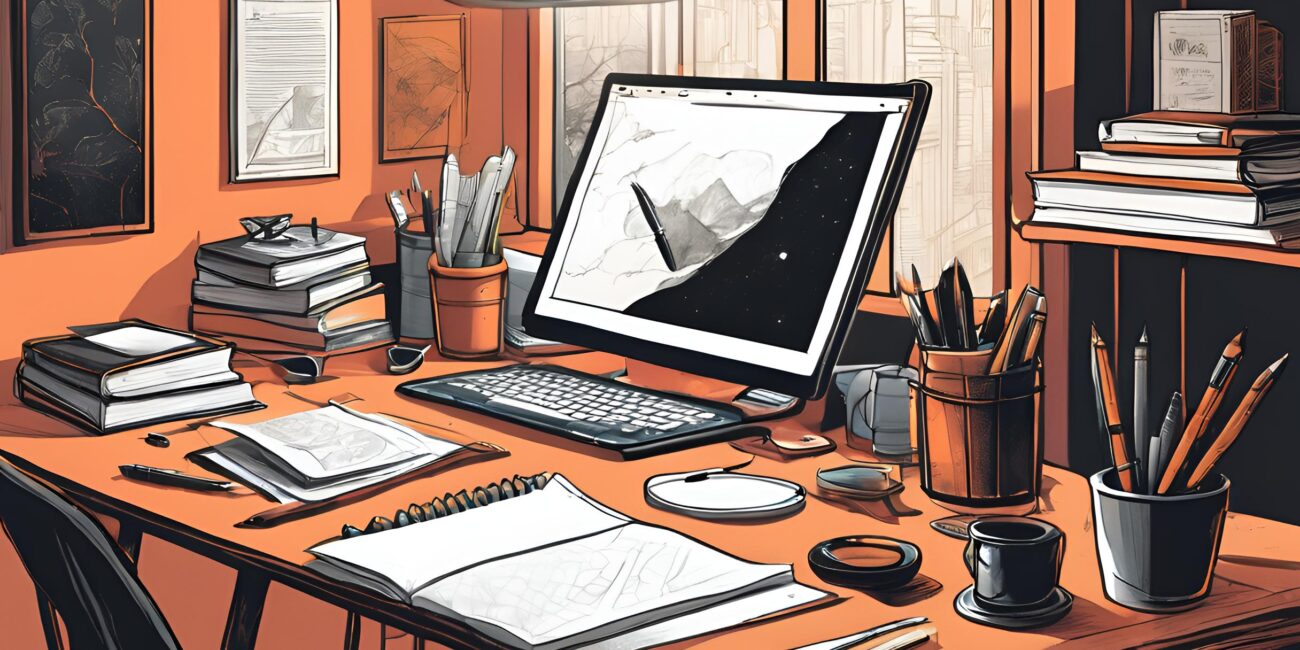
    A writer's desk with a computer and notebook

    Best Practices for Self-Editing

    An external editor might be the ideal option, but we wouldn’t leave you hanging without some editing tips if you’ve already decided to self-edit your work. This might not be the full extent of an essential guide to self-editing, but it will certainly help.

    Take a Break

    Taking a break is essential. If it makes you feel like you’re falling behind or lazy, set realistic goals for yourself and take a short break when you reach each one.

    If you’re not going to allow a new set of eyes to review your work, at least allow your own eyes to approach the work with a fresh perspective.

    We suggest stepping away from your work for a day or two (or even three) before starting the editing phase. Breaks between editing are also helpful to make sure your mind has a chance to process the work you’ve already done.

    Read Aloud

    When you read aloud, you use a different part of your brain to approach your work. You’re forcing yourself to read each word as opposed to skimming over the text.

    As a result, you’re more likely to spot sentence-level errors. Experiencing your writing from an audible perspective can also help improve your grammar and sentence structure.

    Use a Checklist

    The eternal “old faithful”, an editing checklist will always be a trusted tool. If you need a basic guide to get you going, we’ve got you covered.

      • Have a clear goal for what you want to achieve with the text and what ideas you want to convey.
      • Stay conscious of the flow and logical structure of your text, be it a complicated plot or a detailed academic analysis.
      • Be on the lookout for grammar and punctuation errors.
      • Make sure your writing is consistent in style and tone, and appropriate for your intended audience.
      • Double-check all facts or figures.
      • Remove anything that isn’t 100% necessary to your text, such as over-explaining and verboseness.

    When to Find Professional Editing Help

    It’s fair to feel that certain texts don’t need an external editor. For example, a self-edit may be sufficient for shorter pieces with a quick turnaround time.

    However, some projects carry more weight and influence on your career, in which case we strongly advise professional editing.

    High-Stakes Projects

    A “high-stakes” project constitutes any writing project where there’s a lot on the line.

    Think of a business proposal or a research paper — anything that will be scrutinised and can determine the success of your future drastically is high stakes.

    The last thing you want is to submit work that will fall flat and not meet expectations, so a professional editor is essential here.

    Publication Submissions

    When you’re submitting a manuscript for publication, it’s about more than good writing. Your work needs to sell itself.

    Whether it’s a fiction manuscript, a magazine article, an academic thesis, or a biography, publishers can spot good editing from far away.

    By submitting a poorly edited piece, you reduce your chances of being published and create a weak impression for future submissions.

    Specialised Content

    Finally, if you’re writing specialised content, hiring a professional editor is pretty much non-negotiable.

    Specialised content includes scientific, legal, medical, or educational texts that should be edited by an experienced editor in that field.

    These texts will attract the wrong kind of attention if they don’t adhere to the correct technical requirements, which will undoubtedly earn the piece negative reviews.

    Aspects such as referencing, formatting, calculations, scientific or medical terminology and theories, and professional principles all need to be conveyed accurately, so an editor is worth every cent in these cases.

    Self-editing? Check. Now what?
    This is the part where we help you make the write move.

    So, Is Self-Editing the Way to Go?

    The editing process has many roads, some solo and others collaborative. Despite your skill set, the length of the text, or its purpose, as a writer, it’s wise to entrust your work to a professional editor if you want to improve your chances of getting an excellent text.

    It’s highly beneficial to edit and proofread your work, but we can’t help but return to the truth: you’re a writer, and an editor is an editor.

    The two roles may overlap, but your work shouldn’t go unseen by someone who has spent their career learning to do what you might not be able to.

    That doesn’t mean you have to let go entirely. Work closely with your editor, grow as a writer, and you’ll produce the best work you have to offer.

    Blue Leaf Team

    The Blue Leaf Editing team has over 15 years of combined editing, publishing, and book industry experience. We’re passionate about content and storytelling, and sharing our knowledge with others.