BLE at the Franschhoek Literary Festival 2026
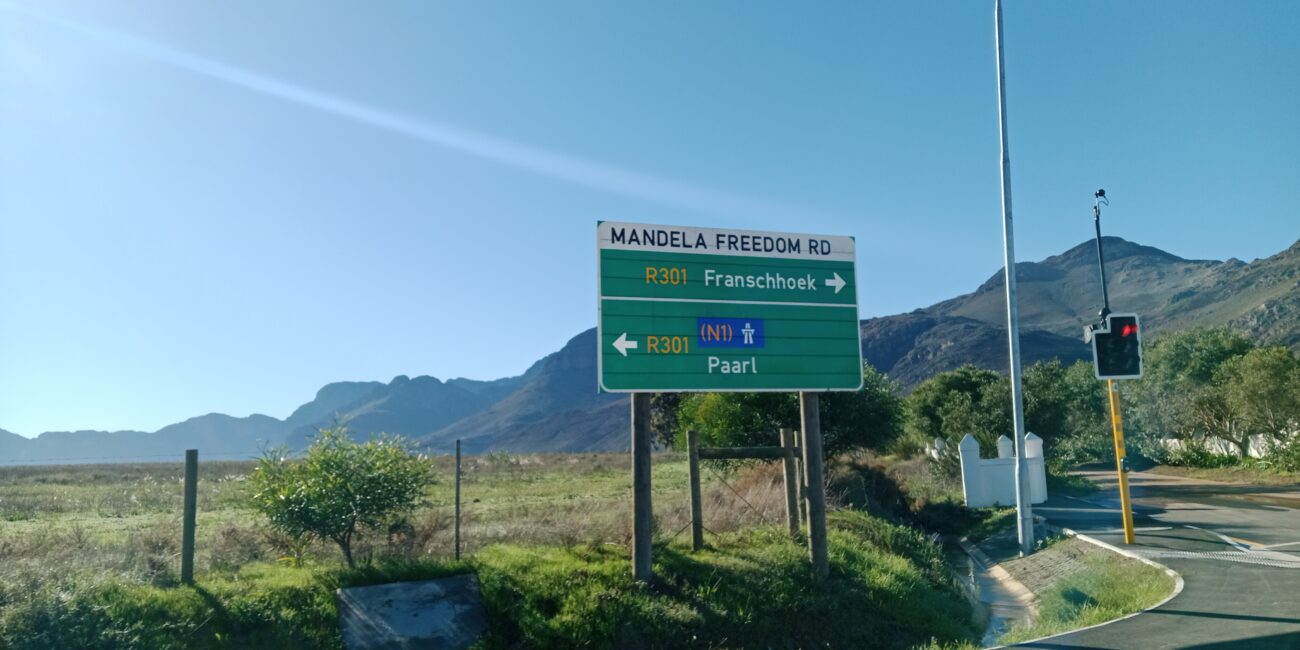
Road sign with arrows. Left is Franschhoek, right is Paarl.

We don’t think that we were the only ones wondering if the Franschhoek Literary Festival 2026 (FLF) would happen.
Just four days before the FLF was supposed to kick off, a terrible storm hit Cape Town and the surrounding areas. Flooding, mudslides, fallen trees and branches, broken powerlines, ripped off roofs, you name it. Franschhoek was equally affected, with the Franschhoek Pass indefinitely closed to all traffic.

Then, two days before the fest, we got the email: “The FLF Is Going Ahead As Planned!” The roads are open and the skies are clear.

This was our third year attending the FLF, but our first time going for two consecutive days (Saturday and Sunday). As usual, the fest delivered.

Table of Contents

    Voyage with Jan

    Panellists: Jan Hendrik van der Westhuizen (chef and author) and Zahirah Marty (destination marketing specialist and travel show host)

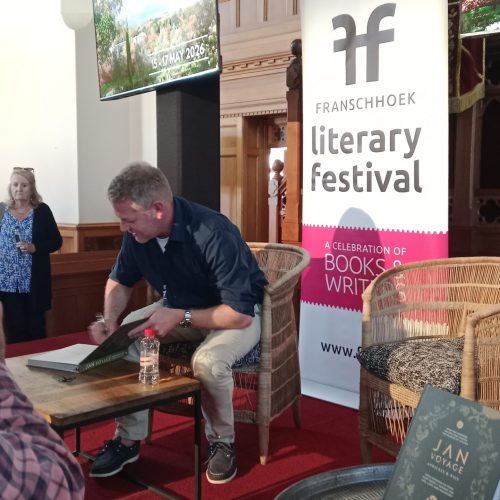
    A man sitting in a chair in front of a table. The man is signing a book with a pen.
    NG Church: Jan Hendrik van der Westhuizen signing a cookbook for a fan.

    Our first panel was a personal one. Our founder, Michelle, is an amateur foodie, so there was no way we were missing the opportunity to listen to South Africa’s first Michelin-starred chef. 

    Jan charmed the audience instantly, mostly thanks to his candid responses to questions. The smell that immediately signifies home for him? Strawberries and cream toilet spray. (If you don’t instantly feel a mixture of nostalgia and revulsion, you have core memories missing from your childhood.) You can get the full story from Michelle’s food journal entry about meeting Jan Hendrik van der Westhuizen.

    What Publishers Really Want

    Panellists: Jeremy Boraine (publishing director, Jonathan Ball Publishers), Anjali Singh (NYC literary agent), and Andrea Nattrass (publisher, Pan Macmillan SA).

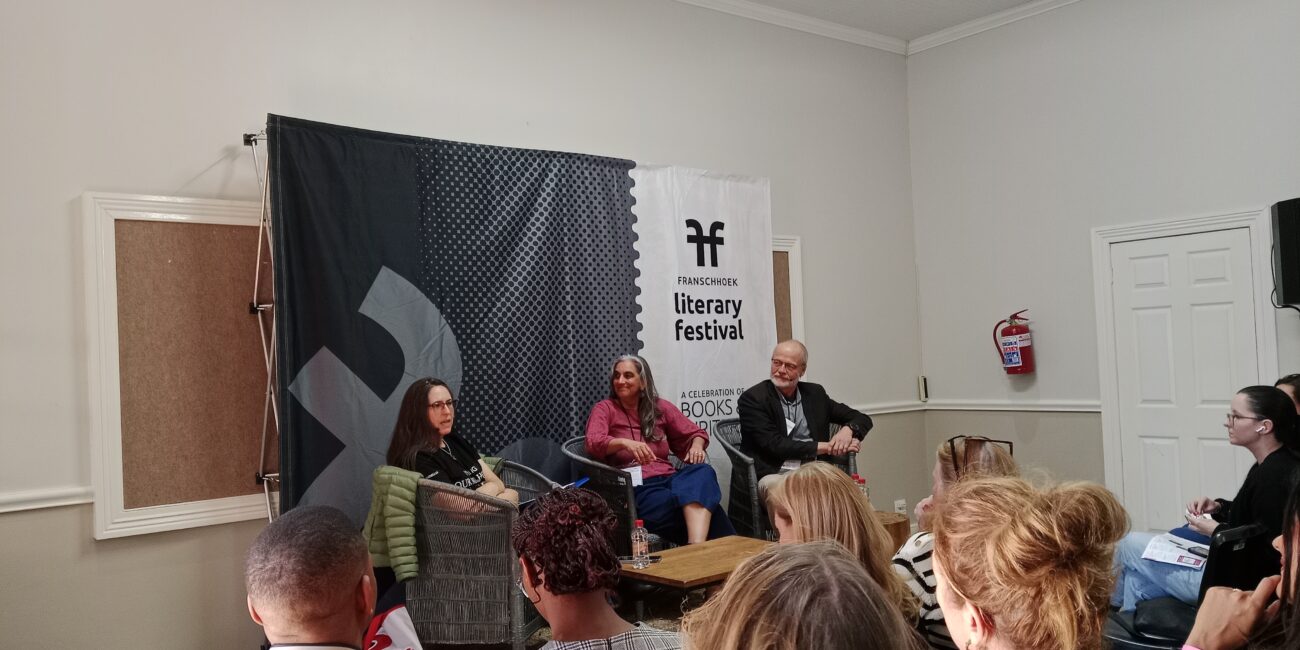
    Two women and a man sitting on chairs on a stage. Behind them is a banner that reads Franschhoek Literary Festival.
    Council Chambers: Andrea Nattrass, Anjali Singh, and Jeremy Boraine.

    What Publishers Really Want is a recurring panel at the FLF with different panellists each year. The discussion echoed themes from the FLF 2025 panel and the London Book Fair 2026:

      • Publishing is a business.
      • Authors need to build support or a community in some way.
      • AI is a reality in publishing.

    Publishing Remains a Business

    This statement isn’t novel in the slightest. Like any business, it comes down to the bottom line. 

    The panel explained that some of the approaches publishers use to manage their budgets are:

      • Cross-subsidising – Publish bestsellers that can cover the costs of less commercial books.
      • Residual sales – Build a backlist that continues to sell steadily.

    But before getting to the sales, the publishers need to obtain something to sell. As with previous panels, the speakers briefly explained the differences between acquisitions and commissioning:

    Acquisitions are when an author submits a manuscript to a publisher, who then approves it for publication. The trick with this approach is that not all publishers are open to submissions all the time. Some have short windows each year, while others are open to specific manuscripts only. If an author’s manuscript doesn’t meet the requirements, it’s automatically rejected. Let’s consider a silly example to illustrate: a publisher is open to submissions about military history and an author submits a romance manuscript. It’s not going to get “acquired”.

    So, what authors need to take away here:

    Research publishers before submitting your manuscript. You’ll increase your chances if you can justify why your work fits into the publisher’s current list.

    Commissioning is when a publisher approaches a specialist (who may or may not already be a published author) and asks them to write a book on a particular topic or from a particular angle. This approach is more common in non-fiction, and is based on the publisher seeing a gap in the market or wanting to capitalise on a trend. But commissioning also has caveats, like publishing lead times. The average publishing timeline is 9–12 months, but this can increase to 24 months when a book needs to reach overseas markets. This means that a book may be out of date or no longer relevant when it finally gets onto shelves.

    Whether following the acquisitions or commissioning route, there’s one thing authors must do to advance their publishing journey: build an audience.

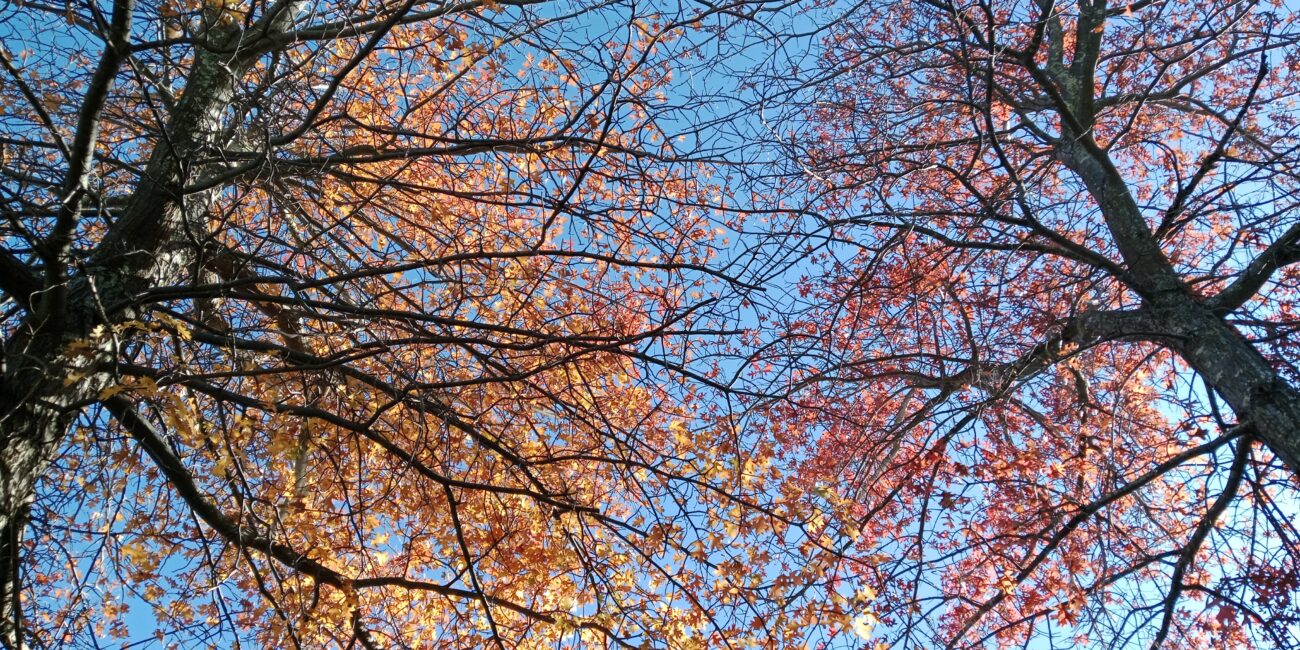
    Autumn trees photographed from below.
    Beautiful autumn scenery in Franschhoek.

    Authors Need a Presence

    Gone are the days when publishers had impressive marketing budgets to advertise books in print media. Social media made sure of that.

    Now, authors have to actively contribute to their book’s marketing efforts. And, understandably, this doesn’t come naturally to all authors, especially when everyone’s thoughts immediately stray to social media and the need to become an “influencer”. Fear not, though, because the panel put a stop to that runaway train.

    Author presence means the author must have a way to engage with their audience, a platform. Social media is the obvious one. Many authors find success on Facebook, Instagram, and TikTok (particularly BookTok). But the platform doesn’t necessarily have to be social media. The newsletter platform Substack is attracting more and more authors as it offers the potential to reach readers directly in their inboxes. Other authors are well-connected in their fields and can promote a publication among colleagues, classmates, or students. 

    Presence isn’t limited to followers, but whether you have a community that will show up for you.

    Presence factors into a publisher’s decision when reviewing a submission. Let’s look at a mini case study regarding online sales:

    Takealot is most South Africans’ go-to online retailer, with Amazon.co.za launched in 2024. Jeremy said that 25–30% of book sales are via online retailers, while Anjali said the figure is 60% in the US (particularly through Amazon). Why do these stats matter? Pre-orders. Can the author get their followers/community to buy the book ahead of publication? If so, the book could be a bestseller before it’s even available. 

    Pre-orders also help publishers to determine print runs. If publishers underestimate a print run, they may lose sales while stores and readers are waiting for reprints. But if a publisher overestimates a print run, they may have overstocks that just sit in storage. Also keep in mind that South African retailers have the option to return stock (called SOR, sale or return). So, sales aren’t guaranteed. If stock doesn’t sell or gets returned, publishers have few options to recuperate the costs: keep paying for storage, remainder the stock (sell it at a fraction of the price to bookstores), or pulp the stock (destroy it).

    Therefore, author presence = important for everyone involved.

    Rage Against the (AI) Machine

    Nowadays, no publishing panel is complete without talking about AI. 

    Pan Macmillan has a human-first policy, while Jeremy asked a simple question to explain his view: “Why sub-contract your voice to a machine?”

    The biggest concern from the two publishers was that many users of AI Large Language Models (LLMs) don’t appreciate how these models really work. Once a user inputs information into an LLM like Claude or ChatGPT, it becomes part of the LLM’s training. The LLM can then draw on that information and regurgitate it for any other user who asks. So, if you input unique plot points or personal information…

    The other side of that coin is that publishers can’t register copyright on AI-generated content. AI content counts as public domain because it’s based on algorithms and learning patterns. A person didn’t produce the content so it can’t belong to anyone. Read up on the Shy Girl controversy as a recent example. 

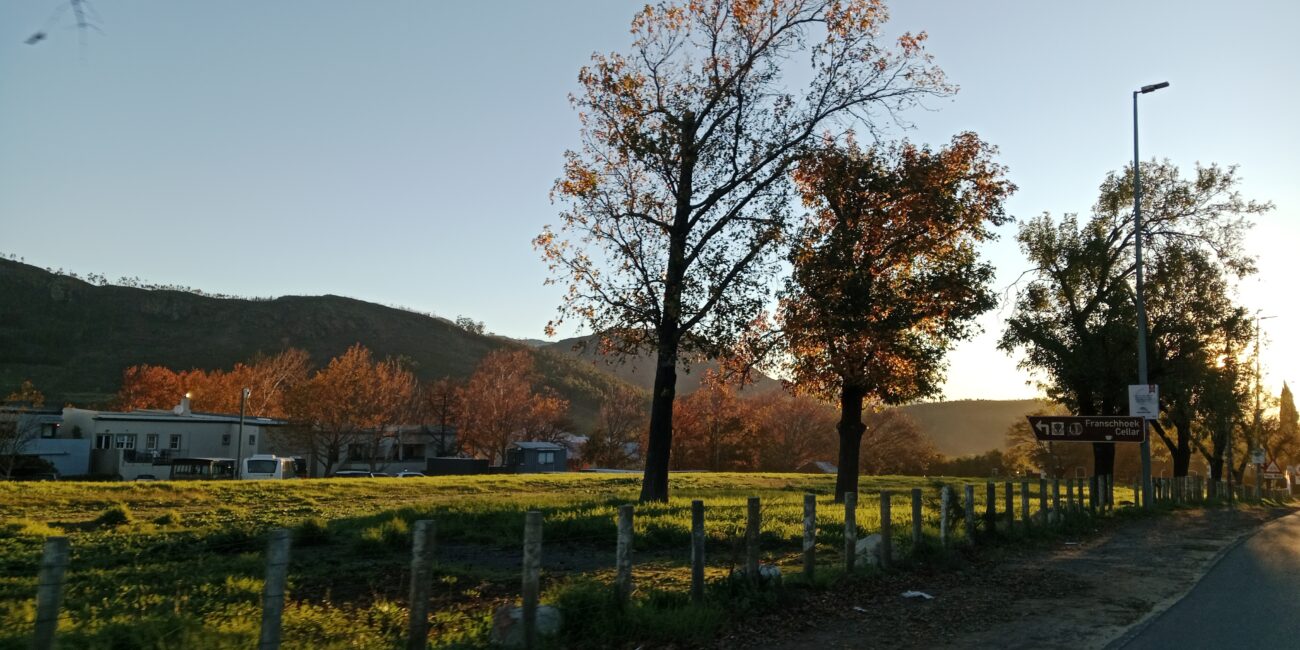
    A landscape showing hills, a field, autumn trees, and posts.
    Beautiful autumn scenery in Franschhoek (take two).

    The publishers also warned against bots that prey on authors, particularly those going the self-publishing route. These scams promise everything from publishing contracts to film deals. And they’re becoming more sophisticated, pulling information from legit websites. Obvious signs like spelling and grammar mistakes are also disappearing. 

    Anjali then turned the conversation to AI companies that target publishers and agents. She specifically mentioned Storywise.ai. The platform aims to simplify the slushpile. Publishers set criteria (a “wishlist”) that their ideal manuscript should meet. They can then analyse manuscripts via the dashboard or connect the platform to their inboxes. The platform provides a “report card” that helps publishers distinguish between manuscripts that meet their criteria and those that don’t. 

    The panel provided tons of food for thought, didn’t it?  

    Saltwater Girls

    Panellists: Veruska De Vita (Deep Blue) and Serai Dowling (A Guide to Wild Swimming in the Western Cape) with Bruce Jack (The Jack Journal).

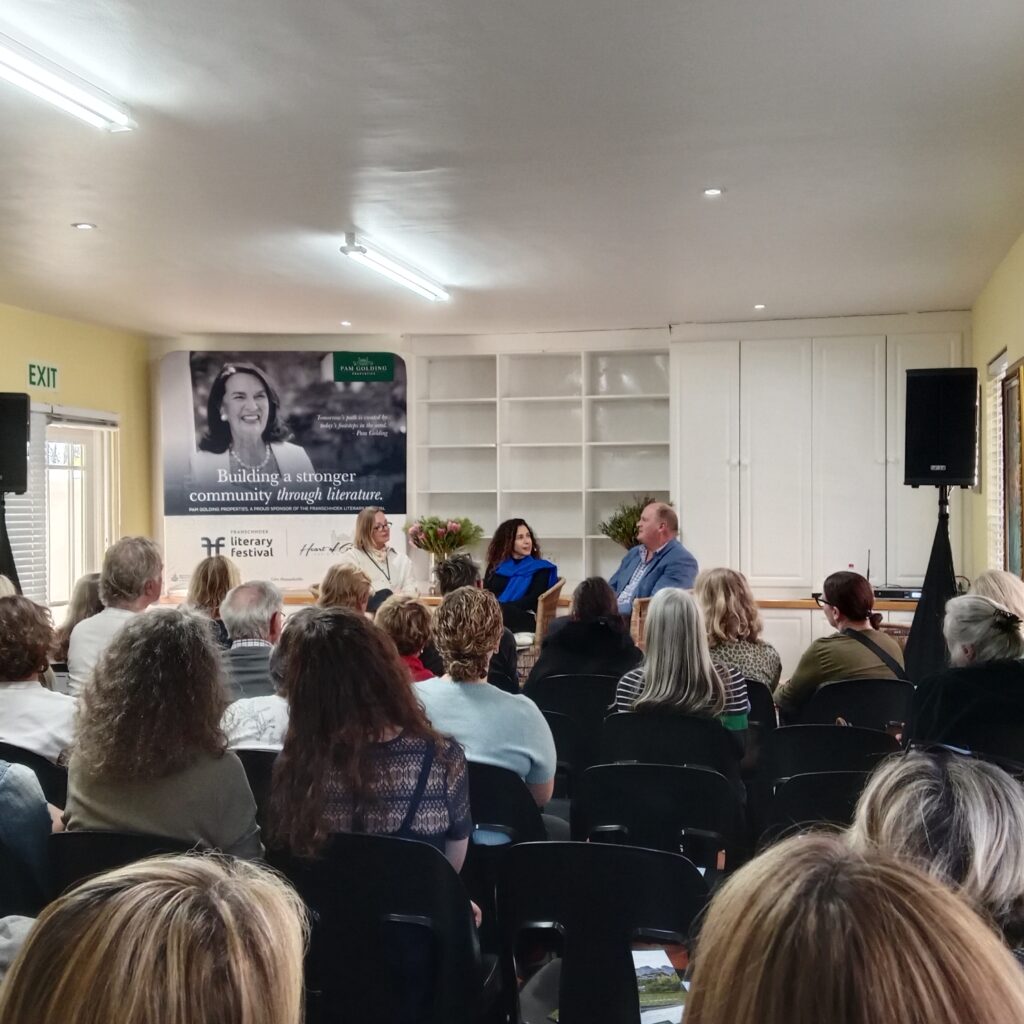
    Three people sitting in chairs at the front of the room, facing an audience.
    Hospice House: Serai Dowling, Veruska De Vita, and Bruce Jack.
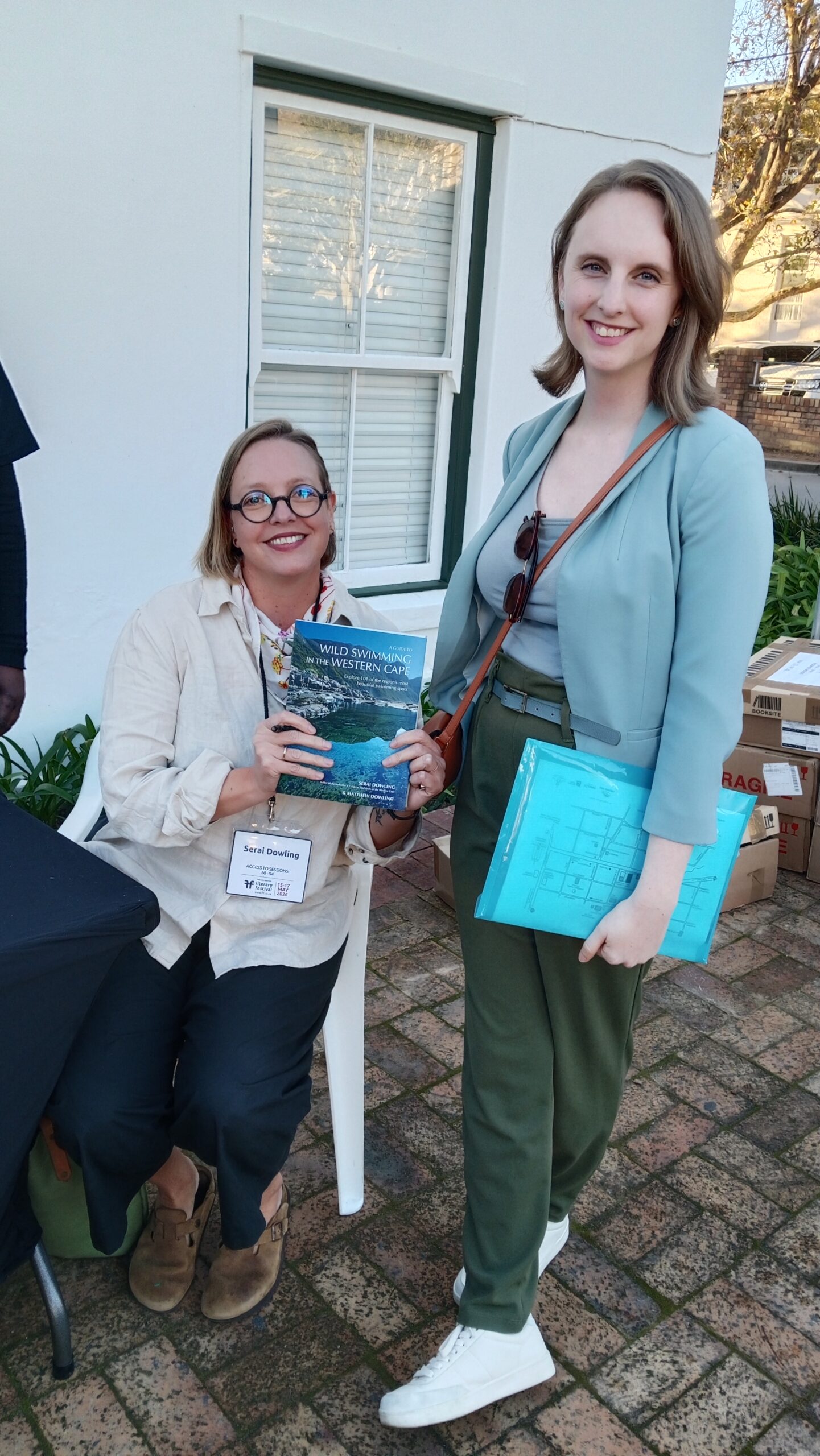
    A woman sitting down while holding a book up with the front cover facing forwards. Another woman stands next to her.
    Getting our "book baby" signed by Serai.

    Last year, we proofread Serai Dowling’s A Guide to Wild Swimming in the Western Cape, the follow-up to the successful A Guide to Tidal Pools of the Western Cape

    From tidal pools and mountain streams to remote river bends and kelp-lined coves, this guide invites you to explore 100 of the most breathtaking, soul-restoring swim spots across the Western Cape. Blending personal reflections, ecological notes, and historical context with everything you need to plan your swim […]; it’s a book for seasoned swimmers, curious newcomers, families, solo wanderers, and everyone in between.

    Serai speaking on a panel was the ideal opportunity to show support, catch up, and get our copy signed.

    Scrums, Secrets and Strategy: Lessons from the Springboks

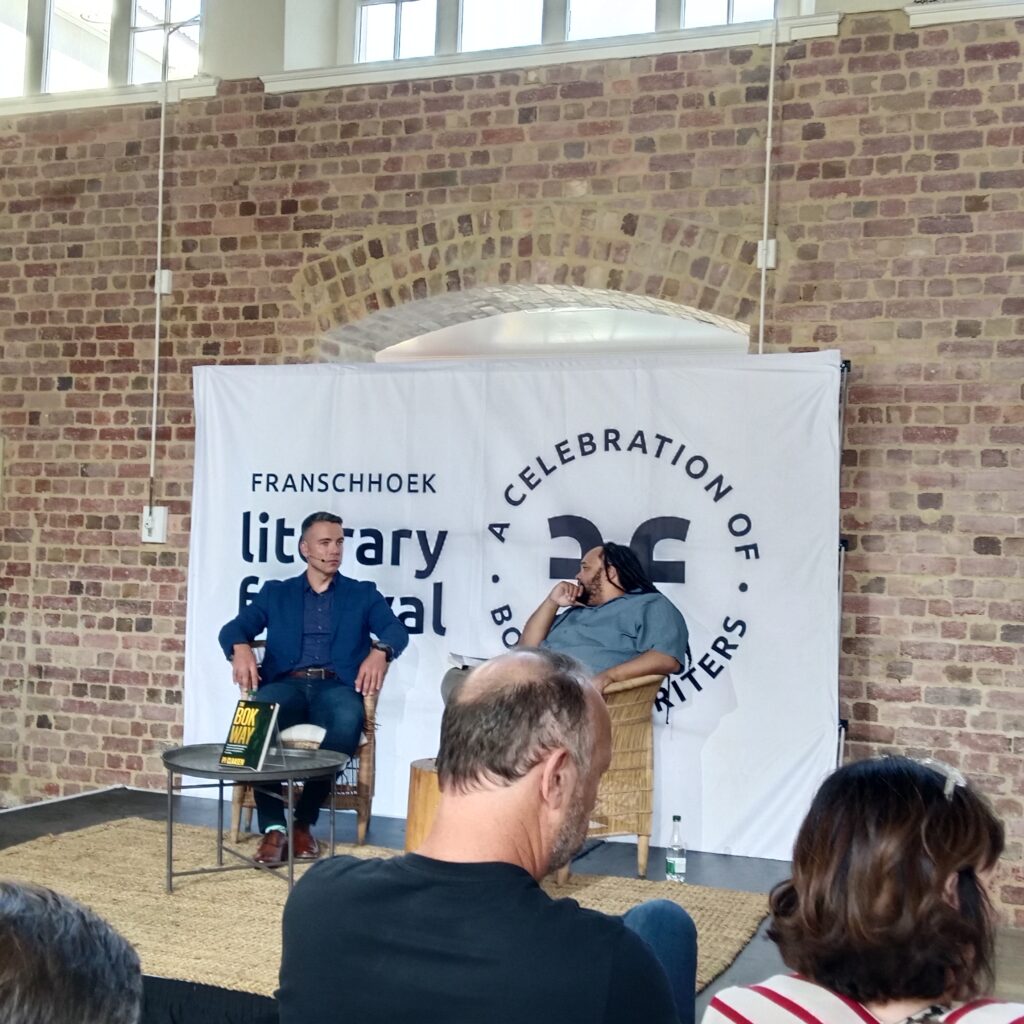
    Panellists: PJ Claasen (The Bok Way) and Lester Kiewit (broadcast journalist, host of Good Morning Cape Town with Lester Kiewit)

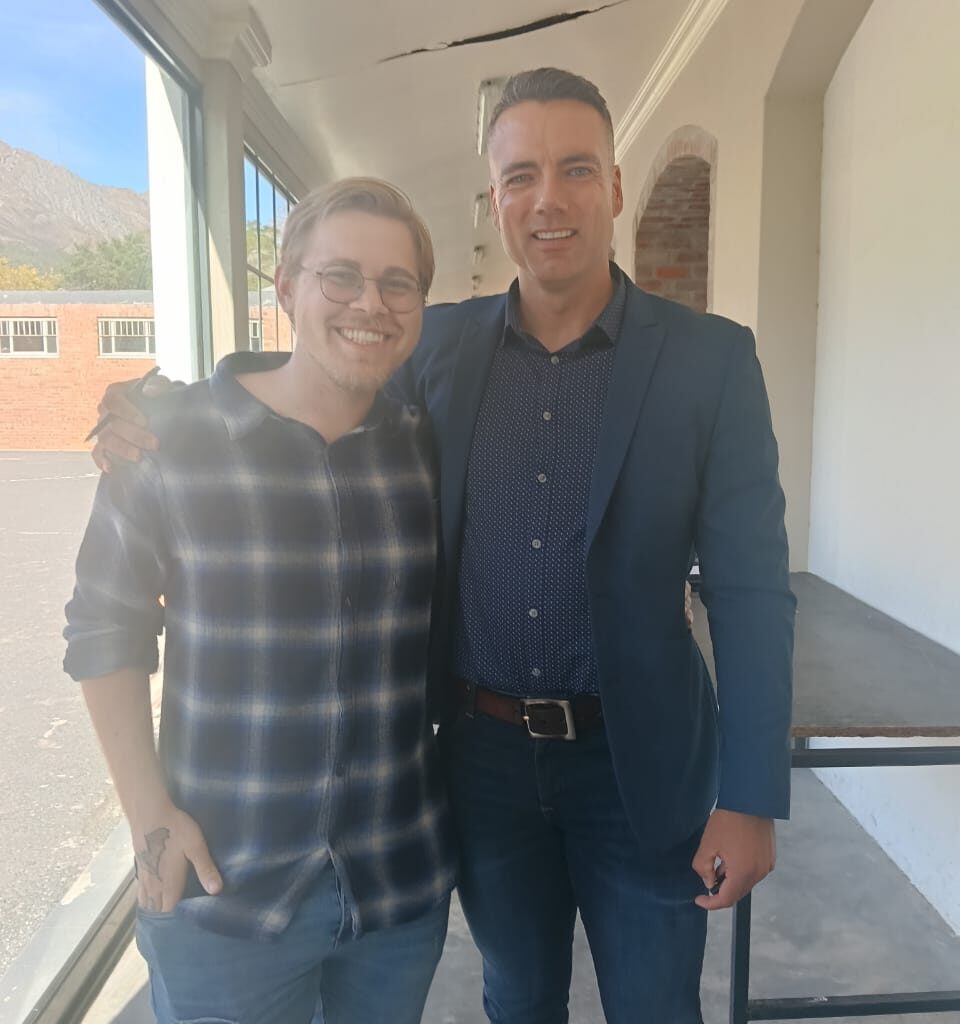
    Two men standing together, smiling at the camera.
    Heinrich with PJ Claasen.
    Two men sitting on chairs on a small stage. Behind them is a banner that reads Franschhoek Literary Festival.
    Old School Hall: PJ Claasen and Lester Kiewit.

    Our last panel on Sunday was also personal. The author is Heinrich’s cousin (our designer), so with publishing running in the family (so to speak), we arrived ready to support.

    As Michelle mentioned in her LinkedIn post, PJ is a knowledgeable speaker. He seriously thought about each question and backed up all his replies with stats and facts.

    What came from left field (is that the right expression? No, wait, that’s baseball, damn) is the parallels between rugby and publishing. No, no, hear us out. The casual rugby viewer is likely unaware of the strategy behind picking the team and training them, the time and effort to show up for an 80-minute match. Rassie Erasmus (the current South African rugby coach) apparently has a list of 100 to-do items that must be ticked off before a game.

    Similarly, the casual book reader is likely unaware of the publishing process behind a book. We’re fortunate enough to stay in the loop because we work directly with publishers, but for someone not in the know, it’s easy to criticise the book’s price and cover, or even lord over the single spelling mistake they found in the book that the publisher “missed”.

    Finally, the chat revealed transferable skills and principles that BLE (or any freelancer or publisher) can implement in its business. What are they? We’re going to be cheeky and say get a copy to find out. 

    Connecting with Colleagues

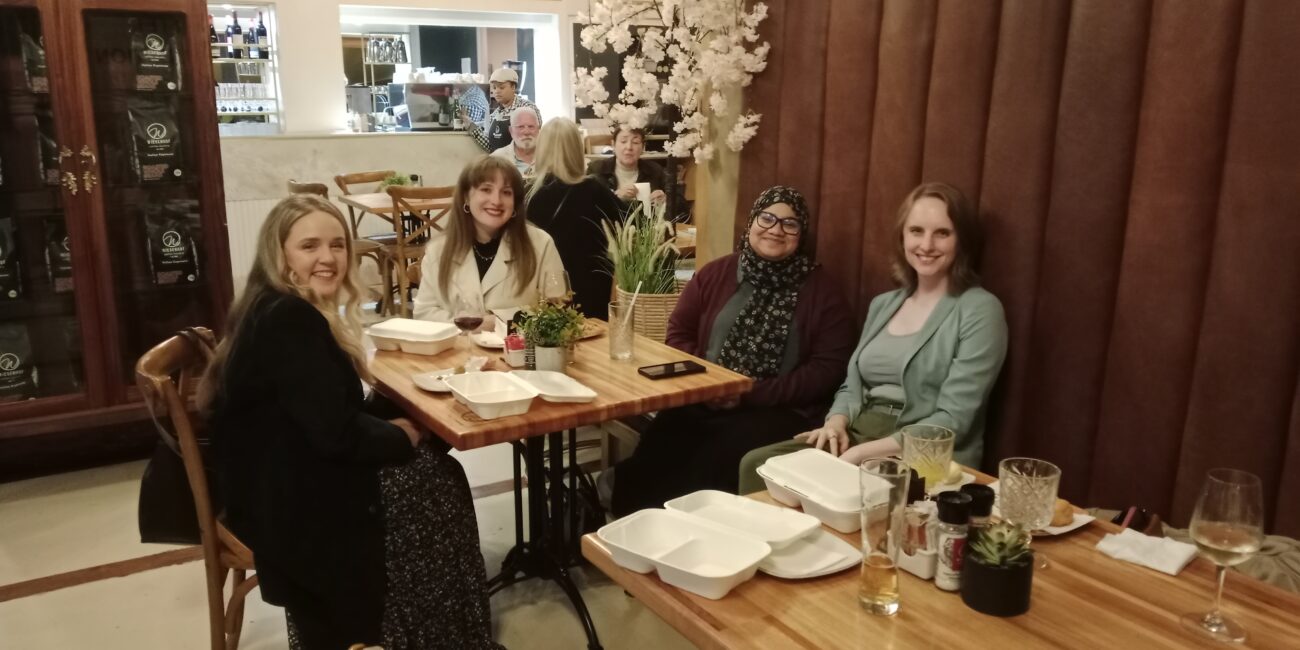
    The FLF doesn’t stop at 17h00. Rockhopper Books hosted a Meet the Publisher event after hours. What a great way to end our Saturday!

    The evening was a mixture of catching up with old colleagues and meeting some colleagues for the very first time in person. It reinforced the importance of networking and relationships for us. Firstly, because freelance editing (any kind of freelancing, really) can be isolating. Most of your interactions are facilitated through a screen, which suits many freelancers just fine, but we appreciated the opportunity to engage with the people behind the emails.

    Secondly, it strengthens your relationships with your clients. So our previous point in reverse. Your clients get to know you as a person and your rapport increases. Plus, they can introduce you around and potentially set you up with new clients.

    Four women sitting around a table in a restaurant and smiling at the camera.
    Michelle with the Rockhopper Books team.

    Closing the Book on the Franschhoek Literary Festival 2026
    This year’s FLF one-upped itself from last year. We found the panels more engaging and informative, and just drove home on Sunday feeling inspired.

    Like we said last year, “it’s one of the few places where the full spectrum of literary life is on display. It’s messy, inspiring, demanding, and deeply human.”

    We can’t wait to see what next year has in store.

    Blue Leaf Team

    The Blue Leaf Editing team has over 15 years of combined editing, publishing, and book industry experience. We’re passionate about content and storytelling, and sharing our knowledge with others.