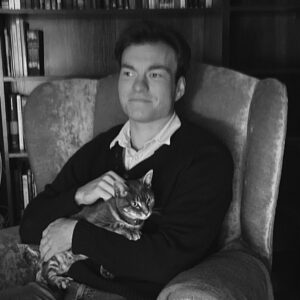
Writing Romance Novels: Insights From a Romantic

In celebration of Romance Awareness Month, we sat down with romance author Shaun van Rensburg to discuss his romance writing process, inspirations, and thoughts on the romance genre.
From Jane Austen to historical research, Shaun shares insights into creating compelling love stories and characters that you simply can’t help falling in love with yourself.
Shaun has written and published multiple short stories in anthologies, including Gallery of Curiosities (with an accompanying podcast episode), Bloody Parchment, and AESTHETIC. He’s also launched a publishing imprint, Pink Dove Books, that advocates for champagne problems and successful romances that make the reader feel cosy.
Table of Contents
Love at First Sight: What Inspired You to Write Romance Novels?
Shaun’s inspiration to write romance stories can be summed up in two words: Jane Austen.
"Everything she writes is very relatable to me. And she does this thing where she does technically write love stories, but it's social commentary. She wrote her books a bit more than 200 years ago now, and you still identify with those characters today."
This connection to believable and relatable characters, through mediums like books and movies, and especially those resembling his own family, drew Shaun to the romance genre.
Believing in love at first sight and appreciating the consistent, fulfilling nature of romance novels, he was captivated by the genre’s ability to offer romance readers a chance to experience love as it should be.
"People have this idea of what the world is supposed to be like and how certain things are supposed to go in their lives—but it doesn't always work out that way because it's real life. And one of the greatest things that I feel a person can experience is love.
I just think that the romance genre gives a lot of people the chance to experience it to the fullest, time and time again. When you're having a bad time in your life, you can open a romance book, and you know how it's going to go for the most part."
Are We Romanticising Romance?
Is the happy ending trope, viewed through rose-coloured lenses, giving us unrealistic expectations as readers and writers? Shaun believes in an alternative view:
"Reading a romance novel gives readers the possibility of really delving into the love interest's mind and kind of rationalising where they're coming from, why they're acting a specific way. We can't do that as people."
So, romance novels help readers to understand motivations and actions that might otherwise be seen as red flags in real life. This perspective fosters empathy and highlights the complexities of relationships, showing that understanding someone’s behaviour requires looking beyond the surface.
A key lesson from romance novels is the importance of unconditional love. We’re reminded that a healthy romantic relationship is a two-way street, requiring mutual effort, understanding, and acceptance.
Now, how does a romance writer translate this complexity into their romance writing?
Building Chemistry: Developing Characters and Plot Structures
'Write What You Know'
When developing characters, Shaun draws heavily from real-life experiences and people he’s encountered, following the classic advice to “write what you know”. This means blending traits from different individuals to create unique, relatable characters. Shaun believes that by grounding characters in reality, they naturally resonate with readers—much like Jane Austen’s characters have done for over 200 years.
"Sometimes it's like a Frankenstein process where you're like, okay, so this person and that person and a little bit of this person. And then it just forms a new entity or a new character."
Broaden Your Horizon
On the other side of the coin, Shaun emphasises the importance of research. Exposure to diverse viewpoints contributes to a good romance novel.
With the internet providing access to endless information and perspectives, writers can enrich their characters by incorporating human elements observed in different walks of life.
This combination of real-world inspiration and thorough research gives characters an authenticity that enhances the overall chemistry and depth of the story.
This makes us wonder: what comes first? The characters or the plot?
Character vs Plot-Driven Approaches
Shaun definitely leans on the character-driven side of the fence. He believes that when readers are deeply invested in the characters, even a simple plot can become compelling. As he puts it: “If the characters are good…then readers don’t really mind watching them or reading about them for extended periods of time.”
The key is creating characters that resonate with readers. Their decisions and growth should feel authentic and relatable.
While acknowledging that certain genres, like romance, often follow predictable plots, strong character development is what truly engages readers.
Shaun stresses the importance of maintaining character consistency and authenticity, asking himself, “Would this character make this decision?” In his view, a character-driven approach is more effective in keeping readers loyal and invested, even when the plot is familiar or trope-driven.
A Lover's Spat: The Challenges of Writing a Romance Novel
It’s not all sunshine and daisies. From writer’s block to intimacy, Shaun understands the challenges around getting together all the loose threads.
Getting Intimate
A common challenge in writing romance is conceptualising intimate scenes. Shaun is no exception. He finds writing sex scenes particularly difficult, feeling uncomfortable with the boundary it crosses between the reader and the two characters involved.
“It feels wrong to just sit there and type that about these characters that I created. I feel like a parent, and it just doesn’t work.”
To manage this, Shaun prefers closed-door romances, especially within the Regency genre, where less explicit content is more accepted.
Happy Ever After
As odd as it seems, Shaun also finds writing genuinely happy scenes challenging. Writing about heartbreak is easier because it links back to “write what you know”. So, to create authentic joy, he draws on the joy observed in others’ experiences or fictional accounts.
Alternatively, Shaun uses friendship as a foundational element in his stories, particularly in “friends to lovers” tropes, which he believes are more realistic and offer a more believable long-term relationship development.
"I feel a lot of the best relationships are based on friendships. I draw on that when it comes to people, to kind of bring them together."
Favourite Romance Themes and Subgenres
Romantic comedy, paranormal romance, billionaire romance, mafia romance—these are just a few of the romance subgenres available. However, Shaun is a hardcore historical romantic.
Regency reigns supreme, but Georgian, Victorian, and Tudor also make an appearance. For some variety, he throws in the odd Gothic novel too. Why these? They often explore themes like:
Complex Character Motivations
Shaun is drawn to protagonists who may initially seem unlikeable but have well-developed backstories that explain their behaviour. Linking back to character-driven stories, he tries to portray his characters with depth, offering rational explanations for their actions.
Otherwise, they appear quite one-dimensional. There will be no internal conflict, and you won’t keep your readers engaged because they’re not rooting for the characters.
Domestic Settings
Domesticity is a characteristic theme in the historical romance subgenre. This is where characters interact within the confines of their homes. Shaun finds that these intimate settings reveal characters’ true selves and vulnerabilities, providing a rich backdrop for storytelling. This focus on home life enhances character development and makes their interactions more relatable.
"I love things that are set in comforting, home settings, because at home, people are who they truly are. But at other people's houses, they tend to be on their best behaviour. I find that dynamic very interesting and very telling."
Research for Historical Romance
Since Shaun’s particular brand of romance is historical romance, he’s shared his top tips for researching effectively:
- Read widely in the genre – Immerse yourself in works by authors known for their historical accuracy, such as Georgette Heyer and Mary Balogh. Their detailed settings can provide valuable insights.
-
- Use credible online resources – Explore online archives and databases for first-hand accounts from the historical period you’re writing about. Be cautious with blogs unless they’re well-researched and include bibliographies.
-
- Verify historical details – Cross-check specific details found in fiction with reliable historical sources. For instance, if a novel mentions a “bell-pull”, research its historical context and usage.
-
- Focus on contextual accuracy – Ensure that historical details enrich the story and character development rather than overshadow them. Authenticity should complement the narrative rather than dominate it.
-
- Immerse yourself in the era – Engage deeply with the historical period by exploring various mediums and details related to it. Familiarise yourself with aspects like social customs, fashion, and everyday life to make the setting feel real.
"Research and immersion really pays off because it becomes second nature. You're going to know, for example, what a mew is, what type of carriage they would've used in this part of London, or if they would have been able to canter in a park. You're just going to know about it without really thinking about it."
Composing Love Letters: Advice for Aspiring Romance Writers
While each writer has their preferred styles and methods, Shaun recommends these tips for writing romance fiction:
Write What You Want to Read
Focus on writing stories that genuinely interest you. “For goodness sake, you’re going to spend a lot of time with those characters”, so you have to be passionate about the content. While others might advise writing what sells, it’s more sustainable and fulfilling to “find something that sells that you want to write”.
Read at Your Own Pace
Reading is essential for any writer, but there’s no need to rush through books. The focus shouldn’t be on the volume of content you consume but rather the depth of understanding and inspiration you gain from them. Take your time and absorb what you read in a way that enriches your writing.
Requited Love: What Do You Hope Readers Take Away From Your Stories?
Shaun’s primary goal is to offer readers an escape from the challenges of daily life. He hopes readers find a sense of relief and joy in the stories, experiencing moments of laughter and smiles throughout.
Even if a reader doesn’t love every aspect of the book, Shaun feels he did his job if he brought a little happiness or humour into someone’s day.
"It's that stupid thing of laughter is the best medicine. I also think laughter is one of the best forms of escapism."
Speed Dating: Five Rapid-Fire Questions
If you could have dinner with any romance author, living or dead, who would it be and why?
Barbara Cartland, because I feel like she would do most of the talking. And she’s just one of the best public personas that I’ve ever had the pleasure of seeing interviewed online.
Happily ever after or second chance romance?
Second chance romance. I feel like it implies that you’re going to get a second chance and that second chance will end happily ever after.
I was thinking specifically of Anne Elliot. And that poor lady, like just Persuasion. Persuasion is one of the best novels ever written. And that’s the first thing that came to mind and I couldn’t go against that.
Favourite character you’ve ever created?
Oh, goodness. There are too many. I can’t choose one. I feel like it would be like picking favourites. No, I can’t do that. It would be unfair to the rest of them. That’s horrible. Skip it. Skip it. I plead the fifth!
Would you rather have a book-to-movie adaptation that’s exactly like your book or a completely different take?
Completely different take. I feel like most book-to-movie adaptations where they really tried to copy the book didn’t get it right.
So, I think it’s better that the artist who’s creating the adaption makes it, or portrays it, in the way they see it or they experience the material. I think it just contributes to the final project, because that person isn’t the author. The book will always stay the book.
You can’t do it better, in my opinion. So do something different.
Would you rather have a book club dedicated to your work or win a major literary award?
A book club dedicated to my work! If I do have that, I’ve made it as an author because that’s the end goal.
A dedicated book club means people care enough about – and like my work enough – to sit around, read it, and discuss it.
Writing Romance and Creating the Perfect Story
Shaun van Rensburg’s journey as a romance writer is a testament to the power of passion and authenticity in storytelling.
Whether drawing inspiration from literary giants like Jane Austen or grounding his characters in relatable, real-world experiences, Shaun’s approach to writing romance is deeply personal and thoughtful.
His emphasis on creating complex, multi-dimensional characters, set against the backdrop of comforting domestic settings, allows readers to escape into worlds where love is both a challenge and a reward.
Through his stories, Shaun hopes to bring joy, laughter, and a touch of escapism to his readers, reminding us all of the enduring power of love.
Blue Leaf Team
The Blue Leaf Editing team has over 10 years of combined editing, publishing, and book industry experience. We’re passionate about content and storytelling, and sharing our knowledge with others.
info@blueleafediting.com